

A clear vision,
ideas that move us forward

The Institute,
decipher, analyze, anticipate

The Institute is Eurogroup Consulting's forum for forward thinking.Here, we analyze weak signals, cross points of view and share useful insights for understanding a changing world. Sustainable transformation requires a combination of lucid analysis, intuitive insight and practical experience. These publications are an invitation to think differently, to question the obvious and to nourish action.
Our panel looks at the financial performance of the leading 24 European headquartered banks in 2025 with new additions of DZ Bank and Nationwide…
In a context where the medical demographic is very fragile, even precarious, public health facilities face a real puzzle. How to ensure continuity of care that meets the needs of the population while optimizing medical time and better responding to the quality of work-life requirements of caregivers? 
Each year, the CCE (Conseillers du Commerce extérieur de la France - French External Trade Advisors) measure the attractiveness of French territory for foreign investors. From this evaluation, which is carried out according to twelve criteria, a global score emerges: the Territory Attractiveness Index (IAT), developed in partnership with Eurogroup Consulting. The slight decrease observed in the global Index last year is confirmed, even accelerating, and the average score has fallen back for the first time to its 2017 level.
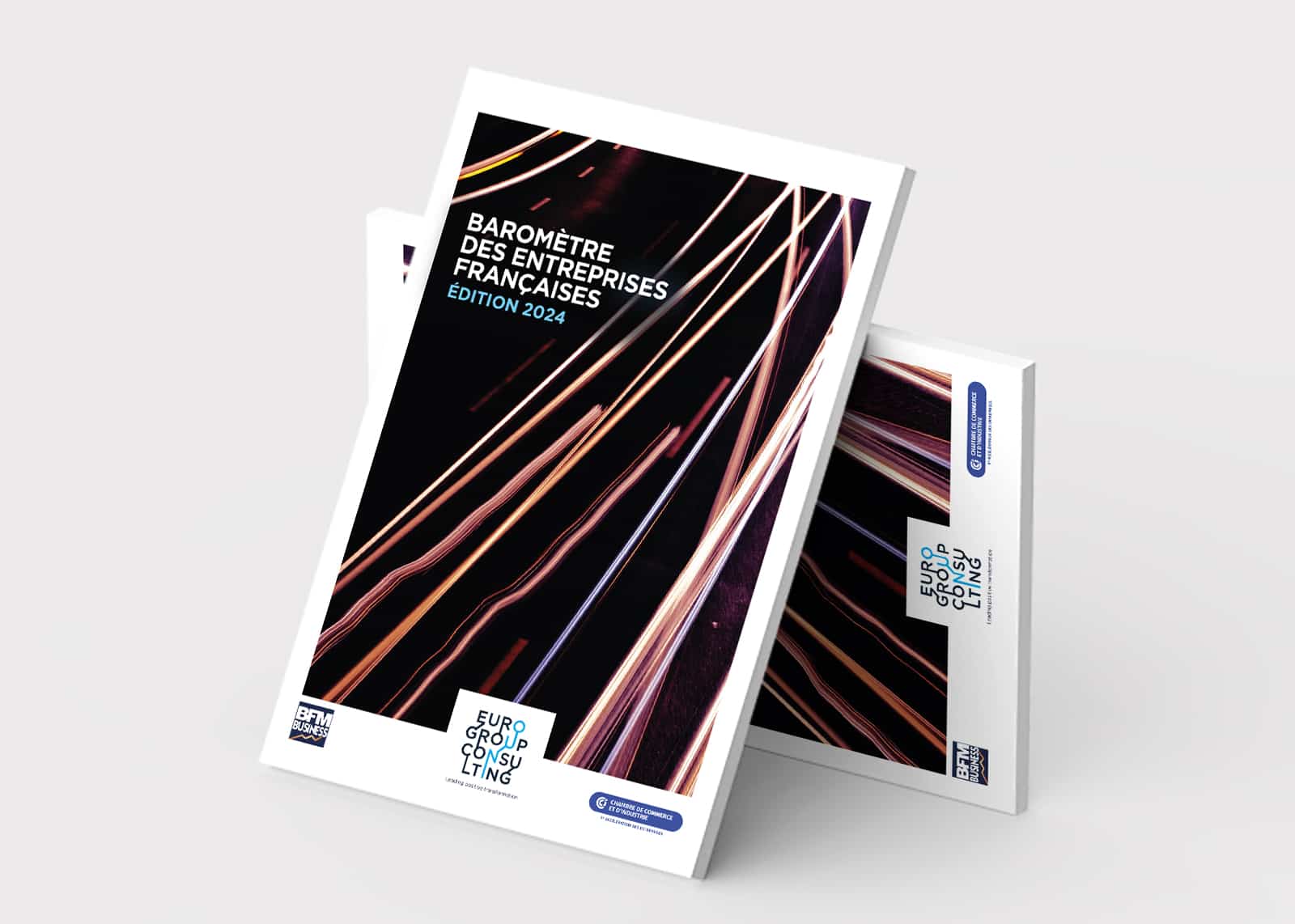
After a year punctuated by heightened geopolitical tensions, the return of inflation and their multiple consequences on the economy, French business leaders, both large groups and SMEs, are approaching 2024 with a general feeling of uncertainty. The Baromètre des Entreprises Françaises 2024 is produced in partnership with the Chambers of Commerce and Industry network and BFM Business.
| Faced with the urgency of climate change, the "Green Pact for Europe" aims to achieve carbon neutrality by 2050. Today, however, this ambitious project is hampered by the successive uncertainties generated by years of pandemics, energy price inflation and the war in Ukraine. Yet the transition to a low-carbon economy also represents a formidable vector for innovation, energy security and green job creation.
By Caroline SCHWARTZ, Manager The findings of the latest IPCC report are unequivocal: global warming is underway—a rise of 1.1°C since the end of the 20th century—and this trend will continue unless greenhouse gas emissions are reduced significantly and rapidly. France’s national low-carbon strategy has set a goal of achieving carbon neutrality by 2050, with an interim target of reducing GHG emissions by 40% by 2030 compared to 1990 levels. The hospital sector finds itself in a paradoxical position: as a source of 8% of GHG emissions in France—equivalent to 49 million tons of CO2—it contributes to the climate crisis just as much as it suffers its effects, even as it is on the front lines in addressing the impacts on the physical and mental health of the population.
The European banking sector has been given the insurmountable task of reconciling rising inflationary pressures, increasing interest rates, and liquidity woes with improving the baseline financial performance of their respective institutions. This report provides insights into the performance of European banks and a snapshot of how ESG can stimulate the long-term performance of the sector.
On June 12, 2023, Stanislas Guérini presented a package of measures to boost the purchasing power of all civil servants, making the attractiveness of the civil service one of the major projects of the Minister for Public Transformation and the Civil Service. These measures are designed to respond to the concerns of civil servants, in a context of high inflation, but also to the difficulties of recruiting and attracting certain professions and profiles.
At a time when France is presenting a Military Programming Law that has no equivalent in the past, and in a context where the risk of high-intensity warfare is very high, France needs to adopt a more proactive and uncompromising innovation policy. This article was published in Les Echos on July 13, 2023, following the publication of the Institut Montaigne report entitled Innovation de Défense, des instruments à renforcer.
At a time when France is presenting a Military Program Law unparalleled in recent years, when threats are both becoming clearer and more elusive, and when we hear talk of war economies and necessary alliances, the question of the effectiveness of public policy in terms of defense innovation takes on all its importance.

Do you have a project? Have a question?

Our teams are ready to listen to your needs and work with you to develop tailor-made solutions.