


The challenge of industrial sovereignty
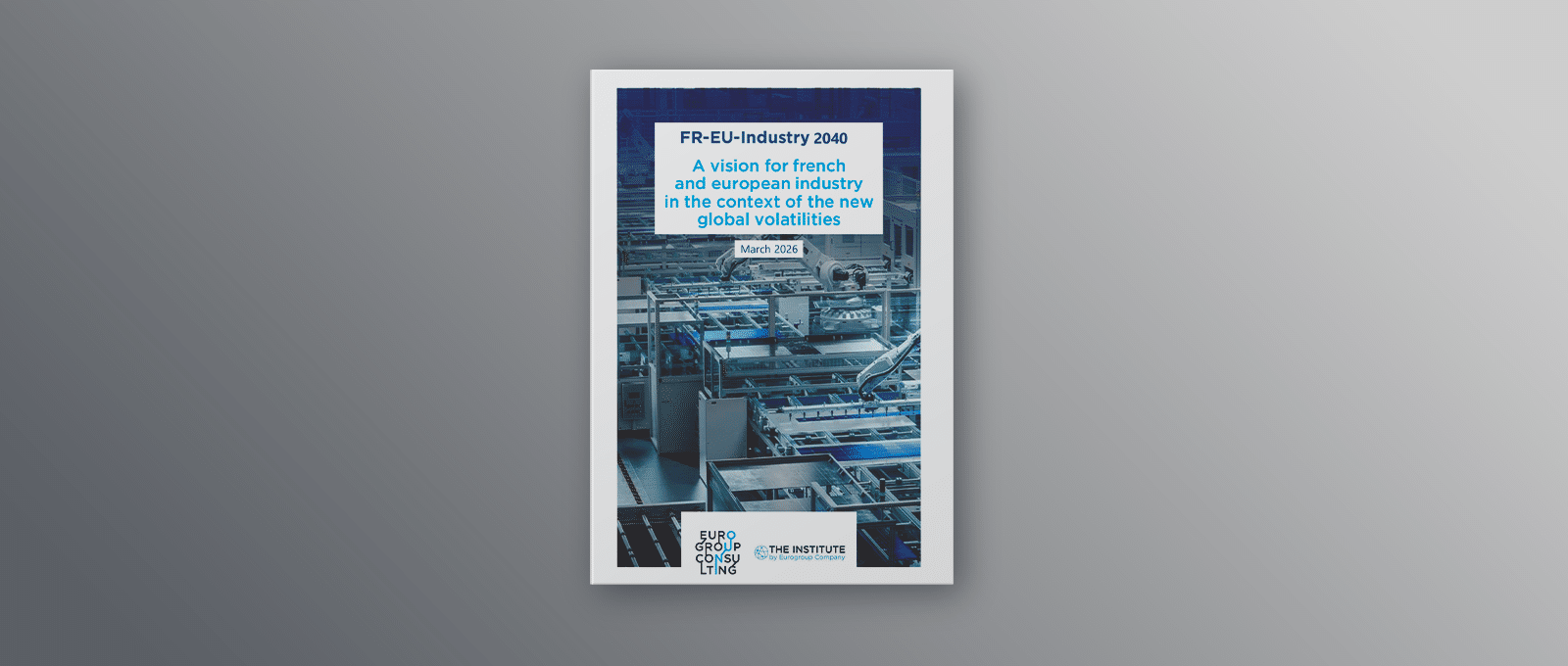
In a context of shifting power dynamics, mastering industrial value chains has once again become a central strategic challenge.
Today, more than 60% of industrial components are imported, with strategic dependencies concentrated in Asia.
At the same time, the United States and China are deploying massive industrial strategies to secure their supply chains and dominate critical technologies.
The challenge is no longer diagnosis, but execution, in a context where speed and scale make the difference.
A decisive decade
Industrial leadership remains attainable, but in a limited number of sectors and provided that clear strategic choices are made.
France must simultaneously reduce its dependencies in critical sectors and accelerate the industrialization of disruptive technologies.
This transformation can only happen at the European level, which is the only one capable of providing the critical mass needed to compete with the major powers.
From vulnerability to leadership
Our study is based on a core conviction: Vulnerability is not inevitable. The window of opportunity remains open, but is closing rapidly.
The France 2040 plan proposes a strategy based on concentrating investments, talent, and industrial capacities on key technologies.
By 2040, this trajectory could generate approximately 150 billion euros in additional added value and create more than one million jobs, while sustainably strengthening French and European industrial sovereignty.
A 15-action roadmap
15 structuring actions are identified to transform current vulnerabilities into levers for sustainable competitiveness.
It proposes a concrete action framework to secure value chains, accelerate the industrialization of critical technologies, and re-establish industrial power by 2040.