




Eurogroup Consulting's expert Mobility teams have carried out this analysis in order to enlighten the market on the potential of automatic metro systems as a fundamental mode of transport to meet the mass transit and decarbonization challenges facing developing countries. The purpose of the study is to provide a clearer understanding of the relevance and differences between automatic metro systems, and to provide food for thought for all stakeholders with a view to their continued growth.
In order to compare these networks, Eurogroup Consulting has defined a methodology that lists the main criteria for defining transport service performance for the travelling customer, and weights the strength of these criteria according to their impact on the perception of a quality transport service.
FRANCE AT THE FOREFRONT OF THE AUTOMATED METRO MARKET
40 years after the inauguration of the world's 1st automatic metro line, in Lille in 1983, Eurogroup Consulting publishes the results of a study analyzing the automatic metro market in France and abroad.
Based on an analysis of 29 automated metro lines on three continents, this study takes a global look at the prospects and challenges facing this market, which is particularly key to the future of the French rail industry. structuring mobility cities of tomorrow.
Benchmark highlights French expertise in this field.
SOME KEY FIGURES
Visit
UITP projects that there will be some 4,000 km of automatic metro lines in operation (compared with 1837 today).
automatic metro lines
are in service in 32 cities around the world. 41% of these lines are located in Europe, 42% in Asia, 15% in North and South America, 2% in Oceania.
Visit
largest operators
operate almost 50% of the world's kilometers of automated metro lines. French operator Keolis has the most kilometers in operation (282), ahead of Singapore's SMRT Corporation LTD (154) and China's Shanghai Metro Operation (116 kilometers).
With
kilometers of line
France ranks 3rd among countries with the densest automatic metro network. It remains a step ahead of other Western countries, thanks in particular to the development of automatic metro systems in medium-sized cities such as Rennes, Lille and Toulouse.
THE AUTOMATIC METRO, A MODE OF TRANSPORT ADAPTED TO THE CHALLENGES OF MASS TRANSIT
In spite of the major changes that have taken place in recent years as a result of health and social upheavals, the attraction of cities remains (economic opportunities, high-quality infrastructure, extensive cultural offerings...). By 2022, more than 50% of the world's population lives in cities or FUAs (Functional Urban Areas), and the European Union's 2022 projections show that the FUA population will reach 1 billion by 2030.
In a context of increasing urbanization, it is becoming imperative for cities to develop mass-transit systems that are adapted to these realities, in order to regulate the tension generated on the transmission networks. This means optimizing existing infrastructures in the heart of cities, which are not very scalable in terms of capacity, and developing new infrastructures on the outskirts.
The characteristics of the automatic metro meet these challenges: automation of conventional lines is an option that is winning over more and more cities, like line B in Lyon and line 4 in Paris, for example.
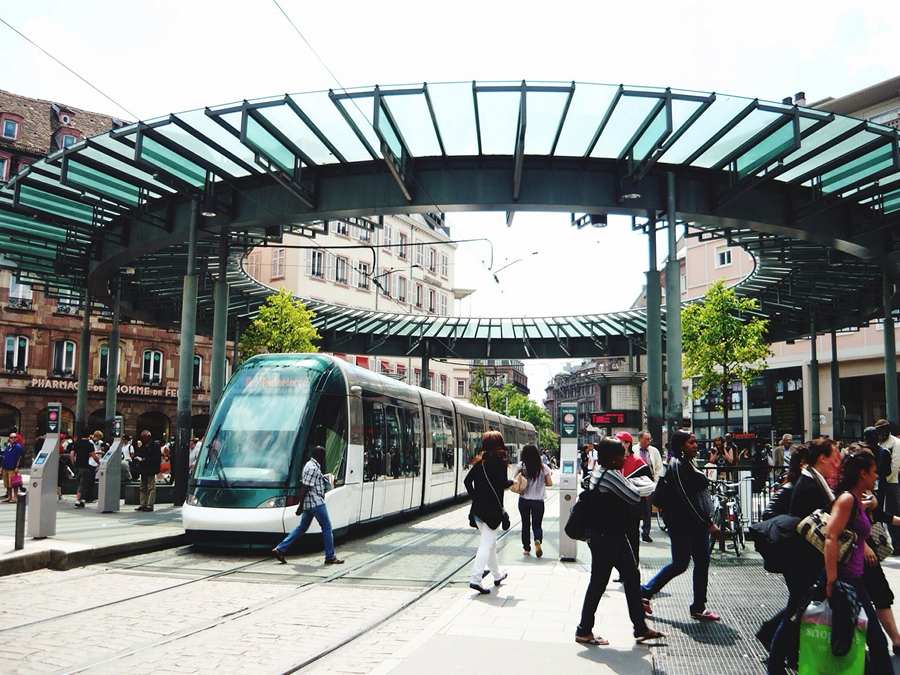
The benchmark also shows that the automatic metro offers an efficient solution to meet customer expectations. Thanks to its high frequency and optimized train capacities, this service is well suited to a growing number of passengers. It is also a flexible transport solution, capable of adapting quickly to fluctuating demand, and less energy-consuming. Service is also generally better than on conventional lines.
In addition, the profitability of these routes has been considerably improved., with up to 30% less operating expenditure. This is due to the flexibility provided in human resources management, the reduction in the number of trains in service (with or without the option of doubling trains), the energy savings achieved, and the increase in service quality which attracts more passengers.

THE WORLD'S BEST AUTOMATED METRO LINES
Analysis of networks' ability to meet customer expectations demonstrates real French know-how The top six lines in this ranking are French (Lille Line 1, Lille Line 2, Lyon Line D, Paris Line 14, Toulouse Line A and, finally, Rennes Line A).
Concerning the the ability of the lines to provide fast travel within the cities, with Nuremberg's lines considered the most efficient (Nuremberg U2 and Nuremberg U3), followed by Dubai (Red Line) and Vancouver (Skytrain Expo Line). Reduced platform stopping times, coupled with reduced braking, make the automatic metro a very fast system. In the sample selected, the average commercial speed is 36.3 km/h.
The automatic metro also represents a high-performance accessibility solution. Almost all the lines surveyed have an elevator at each station, providing access to the platforms for wheelchair users and people with reduced mobility. In addition, there are a number of initiatives designed to improve accessibility and safety for people with disabilities, such as dedicated spaces and light signals.
It also appears that comfort is a key factor in users' choice of transport mode, with cleanliness being a key element. With 8 lines in the Top 10 of the most comfortable, European lines appear to perform particularly well.