




Eurogroup Consulting carries out on behalf of AUTF the third edition of the Barometer of shippers' perceptions of maritime transport. Presented as part of the Maritime Day of the Transport and Logistics Innovation Week 2023 (SITL). This barometer aims to giving a voice to shippers and assess their perceptions of shipping.
The elements of this Barometer are updated every year in order to define trends and offer a global vision to industry players. The elements of analysis in the 2022 edition are based on the facts of the year 2022.
The responses received provide an overview of :
- the preferred modal split by shippers to transport their goods,
- the a clear maritime offering,
- and the satisfaction associated.
The panel is made up of companies of significant size, including 78% of respondents belonging to companies with sales in excess of 1 billion euros. 44% panel is both importer and exporter. The distribution, food processing and chemical industry sectors make up 85% of the panel of respondents. The majority of the panel has its decision center for transport purchases located in France.
SHIPPING PURCHASES
- 44% of the panel purchase transport directly only, This represents an increase of 22 points on the previous year. 37% manages part of its transport directly and uses a forwarding agent for specific flows.
- The entire panel decides on the choice of port, 22 points over the previous year.
- 74% panel seeks to discuss or influence port choice when the services of a freight forwarder are used.
The majority of shippers surveyed are decision-makers when it comes to choosing the shipping line, port and inland carrier.
PORT USAGE
HAROPA, GPM Marseille-Fos and Port of Antwerp confirm their privileged positions for flows to and from France
The panel uses 3 main entry and exit points in France: HAROPA, Marseille-Fos and Antwerp. These 3 ports are used more by the panel of this year (+4, +9 and +13 points respectively compared to the previous year). previous barometer).
- GPM Dunkerque also took on a more prominent role (+34 points) compared to the previous barometer.
- International ports mentioned less frequently this year with the exception of the Port of Rotterdam.
- The first two criteria for choosing a port are costs, in line with the previous edition.
A significant proportion of the panel's cargo volumes pass through French ports, both for imports and, above all, for exports.
- Half of the panel ship more than 75% of their cargo through French ports import and export.
- The majority of the panel uses several ports for the transport of goods.
- On the import side: 11% of the panel use the Marseille-Fos port exclusively (same for HAROPA).
- Export: 15% of the panel use HAROPA exclusively.
- 74% panel members declare no goods are exported from the port of Dunkirk.
SATISFACTION AND QUALITY OF SERVICE AT PORT FACILITIES
Levels of satisfaction with French ports continue to rise, albeit with marked disparities.
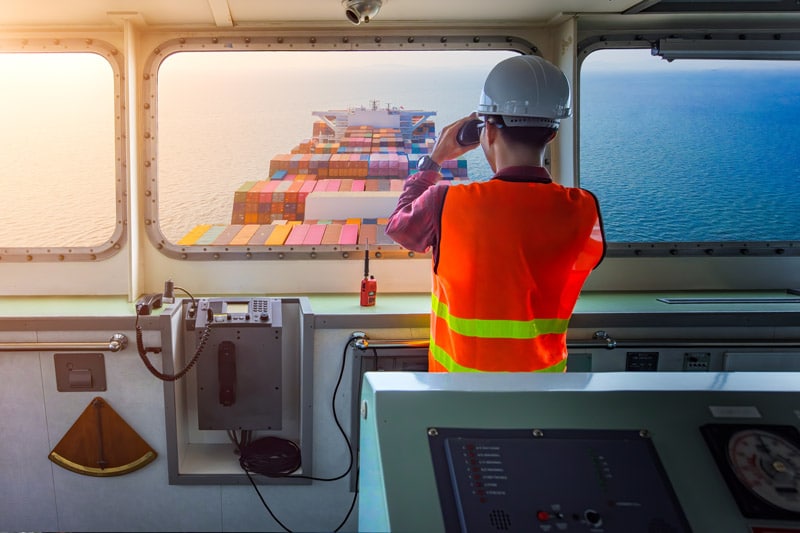
- 63% of the panel said they were satisfied or very satisfied with French ports, up 6 points on the previous edition.
- Like every edition, the port of Dunkirk recorded the best result, with 94% of the panel declaring themselves satisfied or very satisfied, 6 points more than last year.
- 23% of the panel declare that the quality of service at French ports has improved or even greatly improved, down 3 points on the previous edition. Trends in service quality vary considerably from one port to another. The Port of Marseille has the best result on this dimension.
- The range of stopovers, in 3rd place according to the previous barometer, becomes the top priority for French ports this year.
GROUND TRANSPORTATION
Shippers continue to strengthen their commitment to modal shift, particularly to river transport
- Shippers' modal shift commitments on the rise compared with the previous edition: +11 for rail transport and +17 for river transport.
- 56% of the panel have a commitment to modal shift to combined transport (rail/road) pre- and post-carriage.
- Cost and lead time are the most important criteria for choosing ground transportation, consistent with the 2 previous editions of the barometer.
- Environmental issues become the third most important criterion, It was 5th last year.
Road transport remains the main mode for pre- and post-carriage.
- More than half of the panel uses road haulage with more than 75% for pre-carriage. in France.
- Other land transport modes were slightly down on last year.
- Road transport remains the most important post-carriage mode, This is down on the results of the previous barometer (37% of the panel use this mode to more than 50%, i.e. -46 points on the previous edition).
SHIPPING COMPANIES
The panel's top three most popular shipping lines
Visit CMA-CGM continues to be the panel's most popular shipping company, with 93% of the panel using its services. Maersk takes third place ahead of MSC down 12 points on last year. Just like last year, loading space availability, service price and equipment availability are the three most important criteria for choosing a shipping company.
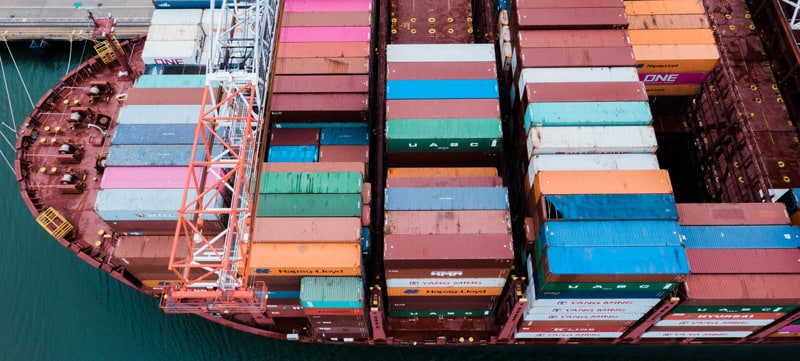
Shipping companies' performance improved
The panel believes that the performance of shipping companies has moderately or strongly improved on all criteria submitted to it :
- the availability equipment: +27 points
- the price service: +19
- the overall quality service: + 19
- the financial stability : +15
- respect for stopovers : +11
- listening to customers : +4
41% of the panel declare contracting with shipping lines through Service Level Agreement (SLA), compared with 10% last year.
THE MACRO CONTEXT 2022-2023
2022 was marked by rising freight rates, port congestion and company service levels that fell short of expectations.
- Rising freight rates was the first issue to confront the panel in 2022.
- Port congestion, which was the least important issue in the previous edition (marked by a particular context with COVID-19), becomes the second most important issue.
- Almost half the panel (44%) will have to find alternatives for a third or more of their transport operations in 2022.. This is an improvement on the previous barometer, whose results were worse (more than half the panel in this situation).
CSR issues and changes in the energy context will be key criteria for maritime transport choices.
- 44% of respondents say that the energy crisis has led them to modify their pre- and post-shipping choices.
- Against the backdrop of the energy crisis, 30% of respondents say they are likely to change their choice of shipping line and 22% for the port.
- 30% of the panel declare that CSR issues could influence the choice of marine mode for 2023 and beyond.
- Then come the geopolitical factors, for 26% of the panel, and changes in the energy context (energy prices, availability of certain energies...) for 25% of the panel.
Seaborne volumes are fairly stable while budgets are still on the rise
- 81% of the panel saw their shipping budget increase in 2022, compared with 97% last year.
- At the same time, only 37% of the panel saw their shipping volumes increase over the past year. Nearly half the panel declares a drop in shipping volumes (+38 points).
- Compared to the results of the previous barometer (2021 vs 2020 data), the proportion of the panel declaring a drop in shipping volumes is significantly higher (+38 points).